Chapter I

Learning

What is taught, in what order, and how we know it worked. This chapter is the academic prospectus: the three schools, the results tables, and the sixty-one things that happen after the last bell.

Rigour is not doing more. It is going deeper, and staying longer with what is hard. Every syllabus below is sequenced on that principle - mastery before movement, and nothing resting on sand.

I·a

Junior School

Kindergarten - Year 6

The Junior years buy one thing above all: fluency. Children who read easily, write clearly and hold number facts cold have spare attention for everything else.

  • Systematic phonics and daily reading, one-to-one where it is needed
  • Mathematics mastery in classes of eighteen, number before calculator
  • An instrument for every child from Year 3, hired through the college
I·b

Middle School

Years 7 - 9

Middle School holds the line through the distractible years. Subjects are taught by specialists from day one, and every student keeps a language and a science through Year 9.

  • Specialist teaching in every subject from the first term of Year 7
  • A modern or classical language carried through to Year 9
  • The Wren Award: service, expedition and a made thing, over two years

I·c

Senior School

Years 10 - 12

Senior School is depth, examined. Students carry fewer subjects further, with a subject mentor each and a past-paper season that is scheduled, marked and debriefed - not crammed.

  • Twenty-two examined subjects; the timetable is built around choices
  • A subject mentor per student from the first week of Year 11
  • University and apprenticeship counsel from Year 10, parents included

The prize list

The results tables

Published every year in this format, whatever the year brought. Cohort sizes included, because percentages without denominators are marketing.

Examination results, latest cycle

Examined grades at A or B
92%
Students sitting an examined language
47%
Final-year cohort size
38 students

Destinations of the 38 leavers

University offers received
44 offers
First-choice course offers
31
Apprenticeships, conservatoire and gap deferrals
7

After the last bell

The co-curricular index

Sixty-one societies, ensembles and teams meet weekly. The rule is one commitment minimum, two maximum - depth beats collection.

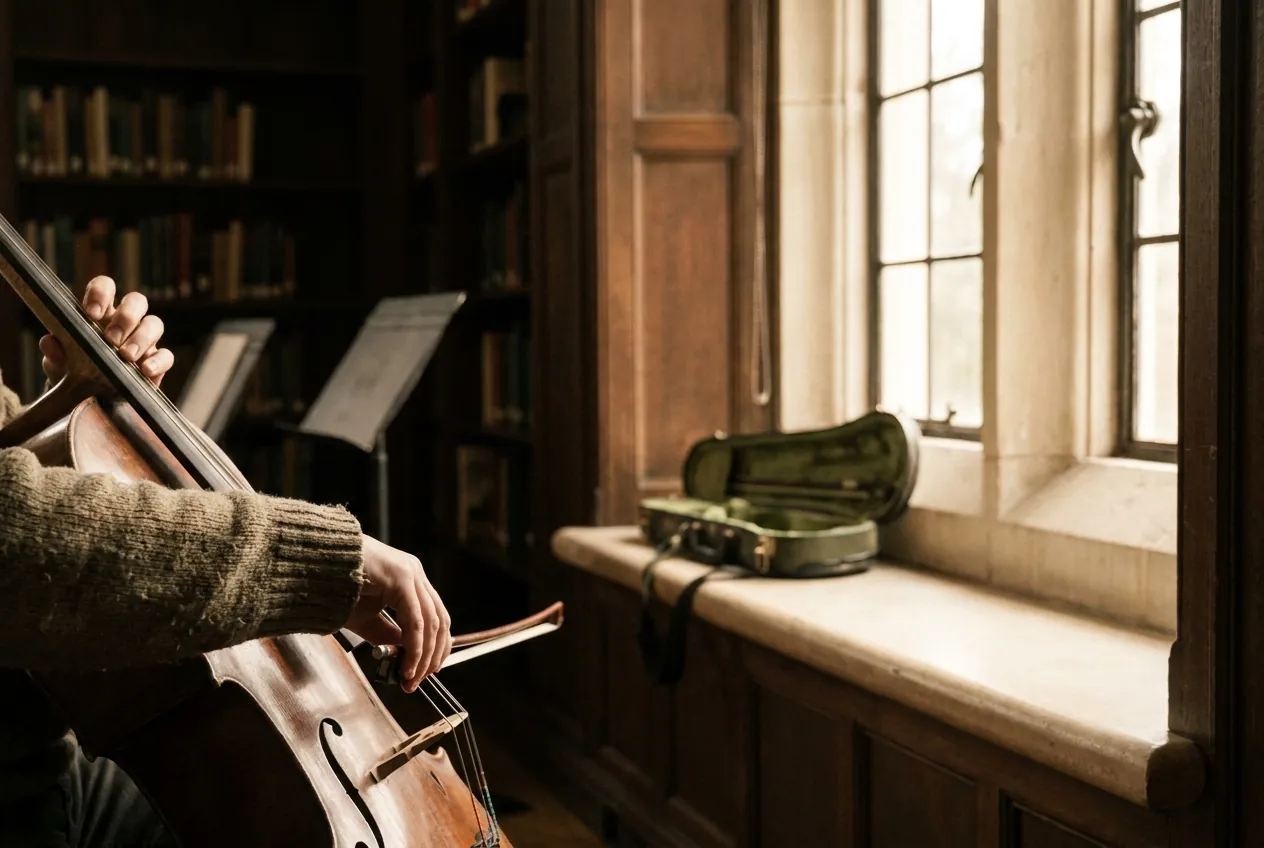
A student's hands during a cello sectional in the Wrenfield music room
Sectionals at 7:30 am, by choice, most mornings.PL. VII
  • Chamber Choir01
  • First Orchestra02
  • Debating03
  • Chess04
  • Drama Company05
  • Robotics06
  • Cross Country07
  • Rowing08
  • Art Society09
  • Model UN10
  • Bushcraft11
  • Jazz Band12
  • Football13
  • Netball14
  • Astronomy15
  • Ceramics16
  • Mathematics Circle17
  • Service Corps18

Asked at every tour

How much homework should we expect?
Set by stage and printed each term: twenty minutes nightly in the Junior years, rising to two focused hours by Year 12. If it regularly takes longer, we want to know - that is data, not failure.
Do you stream or set by ability?
We set in mathematics and languages from Year 7 and keep every other room mixed. Sets are reviewed each term, and movement between them is ordinary, not an event.
What if my child is behind in reading?
The Junior School runs one-to-one reading recovery inside the timetable, not after it. Most children close the gap within a year, and nobody reads aloud to the class before they are ready.
How do you report progress?
Grades and a written paragraph each term, a parent evening each semester, and a standing rule: no surprise should ever survive to report day. You will hear from us early.

Something we have not answered here? Ask it on a school morning.

See the classrooms working

Results tables tell you where the last cohort landed. A school-morning tour tells you how - and whether it fits the child you have.

Book a Tuesday-morning tour
Build me one like thisBuy Wrenfield College, $249 USD