The Works
The works
OFFCUT runs out of one warehouse unit with a cutting table, a rack of sourced cloth, and a screen-print bench. This is where every drop is sourced, cut and shot.
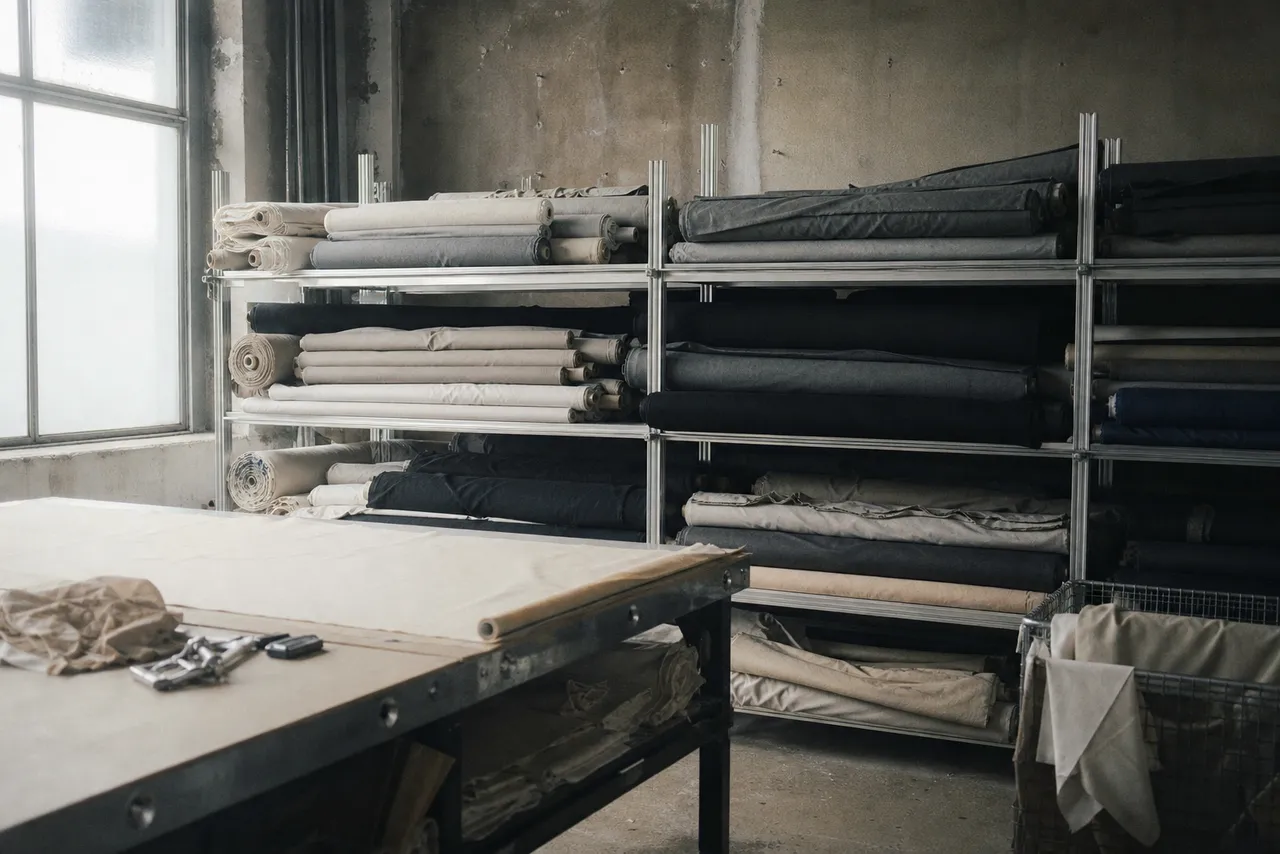
Sourced cloth is not a gimmick. It's the whole brief
The industry makes more cloth than it ever uses. Mills weave past the order, factories cut around their patterns, and good rolls sit in warehouses until the space is needed. That surplus is where OFFCUT starts. We source it by the roll, pattern a small run around what each length gives us, and treat the limit as the point. A finite amount of cloth makes a finite run of clothes. That is the whole model, and it is why nothing is ever made twice.
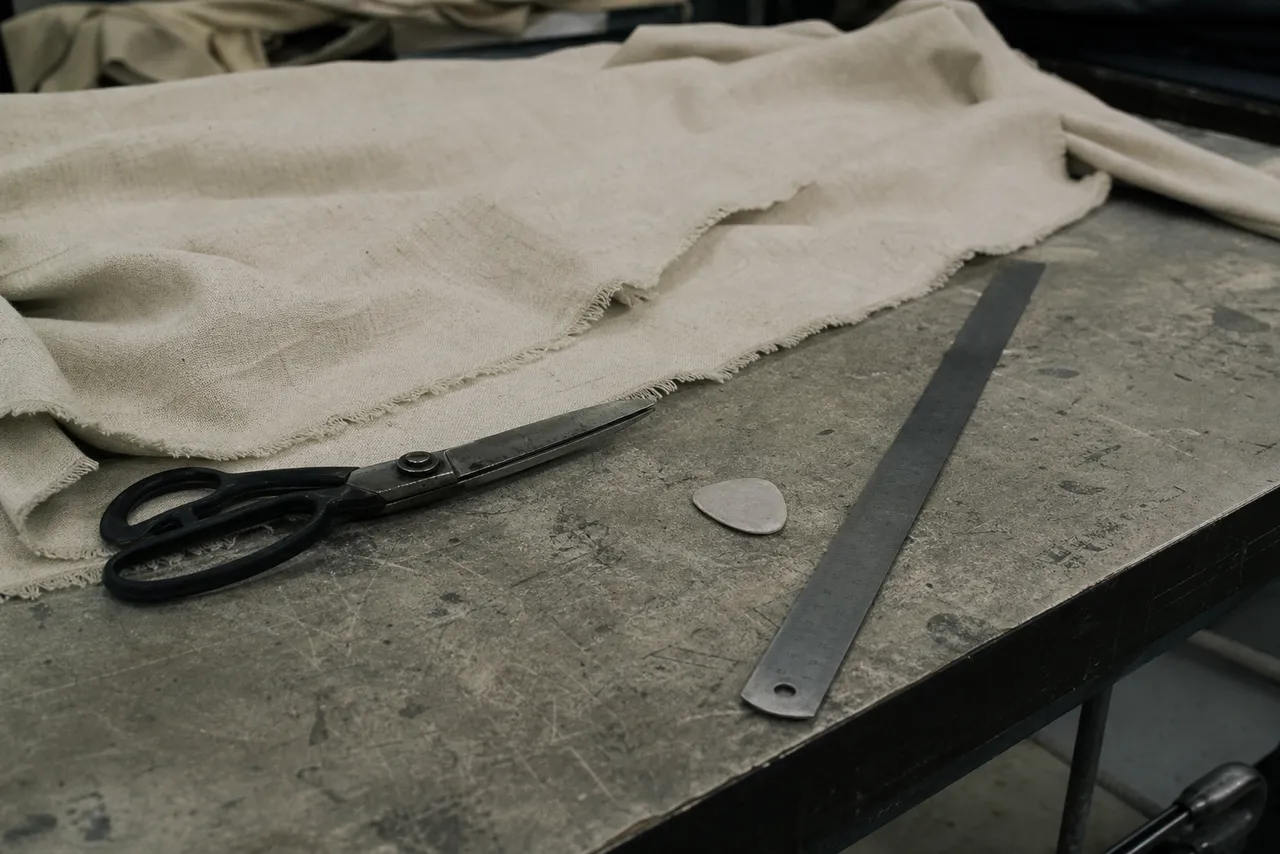
How a drop gets made
Source
We source mill-end and deadstock cloth by the roll, whatever good surplus we find that month.
Cut
We pattern a small run around what the cloth gives us, then cut and sew it on the bench.
Drop
The list gets first look, then the drop goes public. Each piece ships numbered and tagged.
Gone
When the run sells out we retire it and move to the next roll. No restock, no reorder.
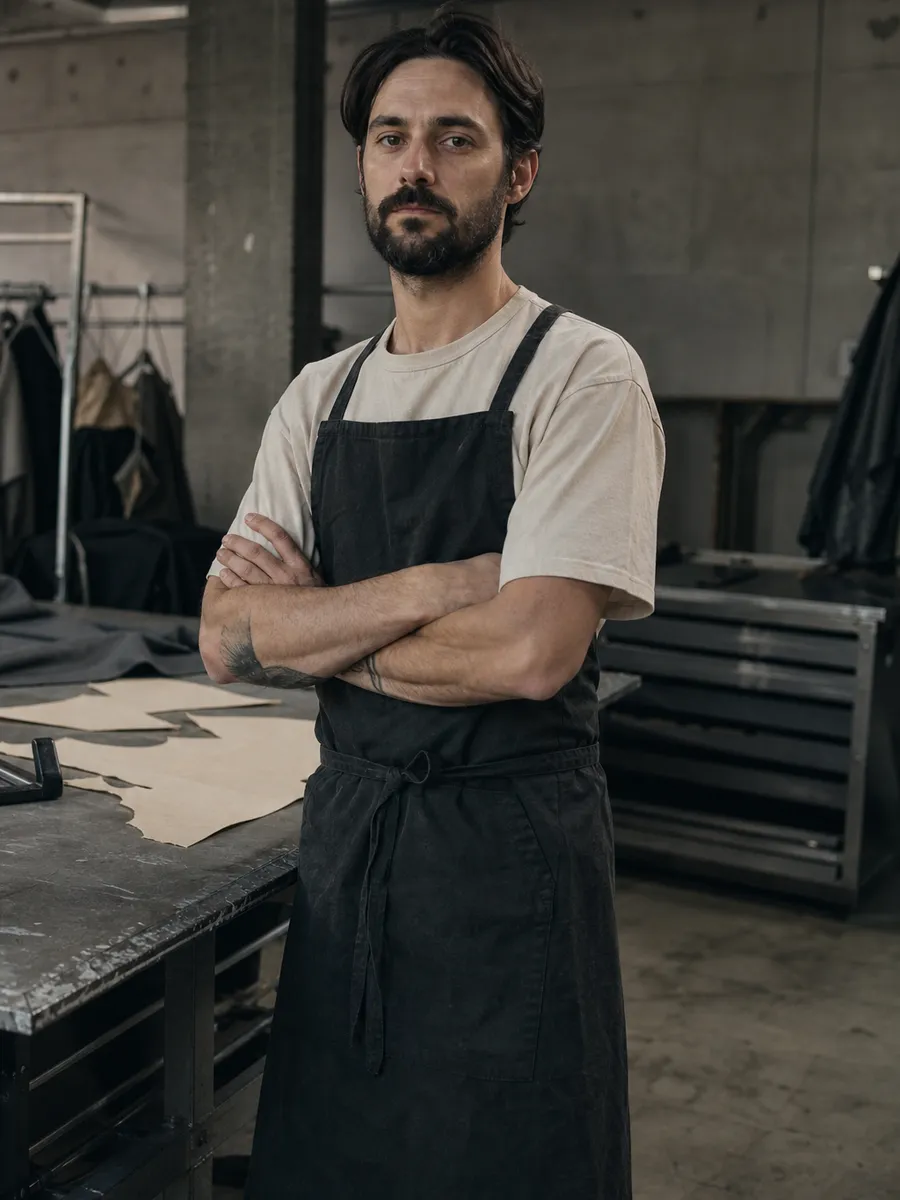
The bench
Who cuts it
OFFCUT is Remy Vale and a two-person bench. Remy started the studio after years on a factory floor that binned more cloth than it shipped. Every piece you buy is cut by hand, a short walk from the roll it came off.
Remy ValeFounder and head cutter
See it on the street
The current drop is live now. Same cloth story, ready to wear.