Websites for Creative Studios.
Your site is a portfolio piece whether you meant it to be or not. A client judges how you would treat their brand by how you treated your own.
What the site has to do
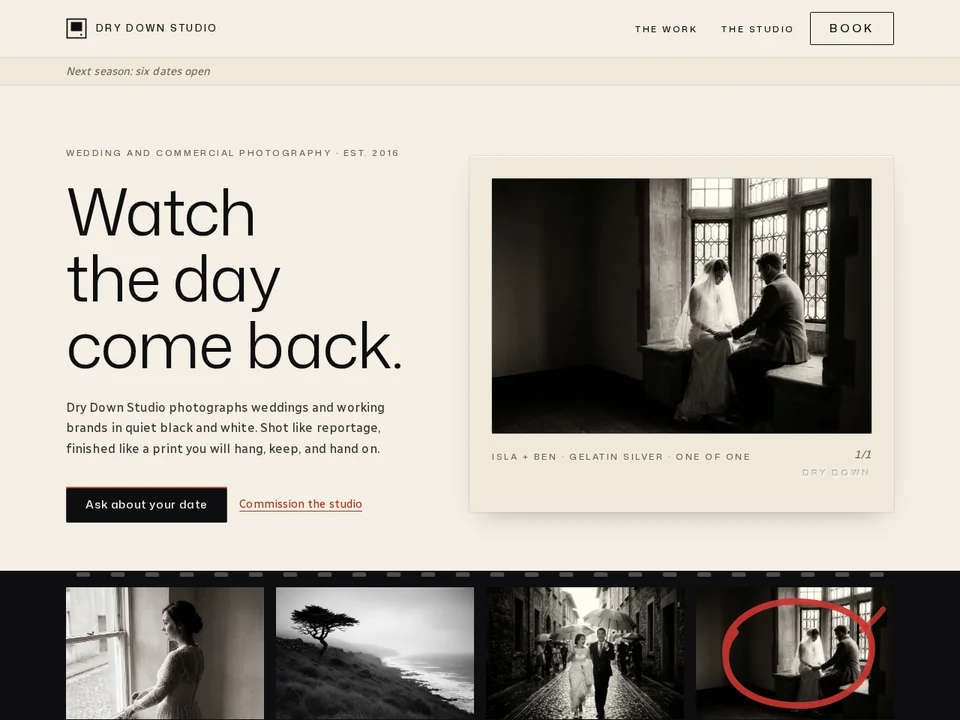
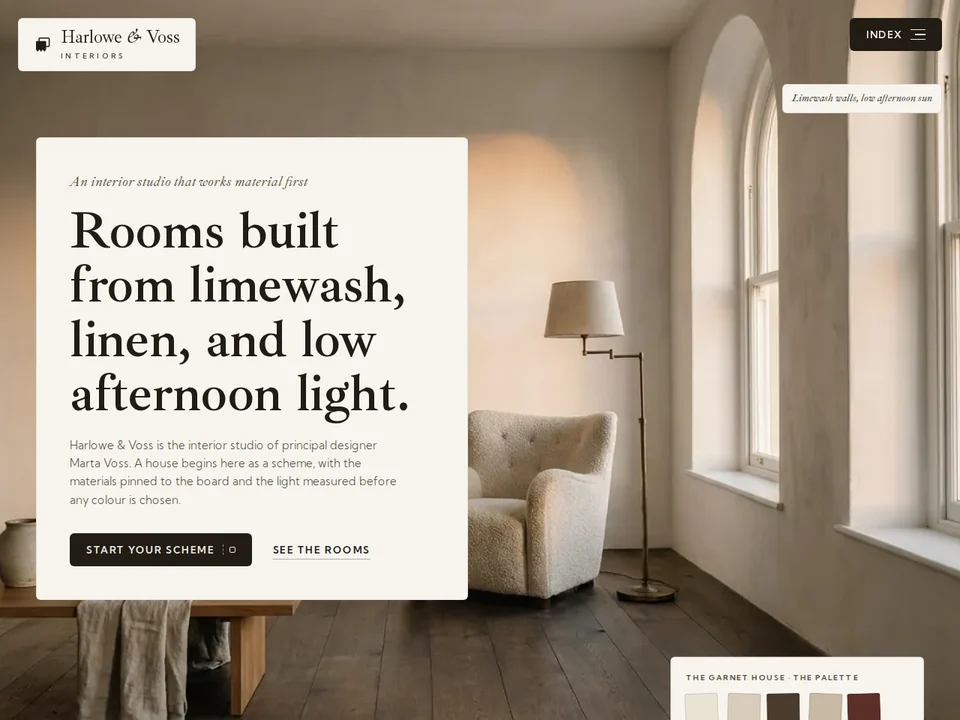
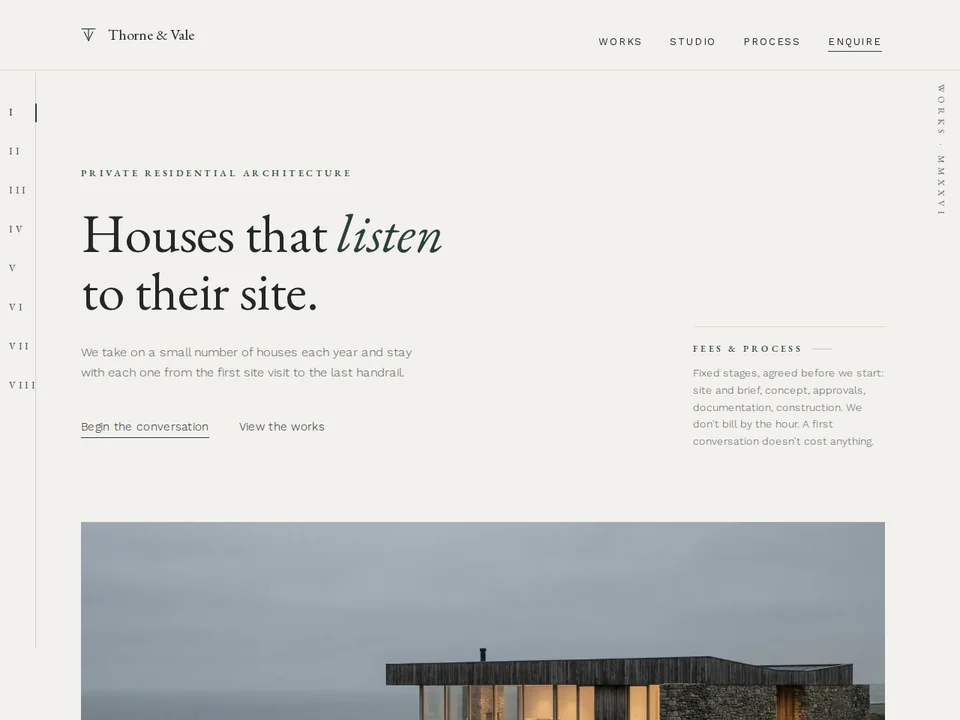
- Let the work be the largest thing Big images, restrained type, nothing competing with the portfolio.
- Not stuck inside a platform It is yours to keep and yours to change. No builder watermark, and it sits with you rather than inside a platform account.
- Load fast despite the imagery Properly sized and lazy-loaded, so a heavy portfolio still opens instantly.
- Make hiring you obvious The best work in the world does nothing if the enquiry is buried in a footer.
How does a potential client judge a design studio's own website?
A potential client judges a design studio by the smallest choices on its own site before they ever judge a project in the portfolio. The spacing, the type, whether an image loads crisp or soft, all of it reads as a signal. If the studio's own site is careless, a client assumes their brand gets the same treatment.
A studio's own site matters more than almost any other kind of business site for exactly this reason. It is not describing the work, it is a live sample of the work, and a visitor reads it that way whether the studio meant it to be one or not.
The safest move is restraint rather than flourish. Let the images fill the page, keep the type plain, and resist the urge to prove range by cramming in every style the studio has ever worked in. One project shown properly convinces more than ten shown at a glance.
Should a photographer keep their portfolio on Instagram instead of a website?
A photographer can build an audience on Instagram, though it works more like a rented shelf than an owned one. The algorithm decides who sees a post, the platform can change its own rules overnight, and a client wanting to see a full body of work is left scrolling a feed built for quick glances rather than a proper folio.
A website does the opposite job. The images appear in the order the photographer chose, at the size they chose, next to nothing that is trying to sell the viewer something else in the same scroll.
Most working photographers end up running both, Instagram for reach, a website for the moment someone is actually deciding whether to hire them. The website is the one that gets the longer look, once the algorithm has already done its job of getting someone curious.
Does a creative portfolio need a new website every time the work changes?
No. A template's images and words live in a file the studio can edit directly. Swapping in a new project takes an afternoon, because nothing outside that file moves, so the site itself is never rebuilt. The licence attached to it never expires, so there is nothing to renew.
What changes over time is usually the work, not the layout underneath it, and a layout built well can carry several years of different projects without looking dated, provided the images doing the talking remain current. A studio shooting black and white this year and bright colour the next still reads as one body of work if the frame around it does not change.
The one thing worth checking before buying is exactly what the licence covers, one site, kept for as long as it is wanted, so there is no surprise later about what was actually bought. It is a small thing to check, and the one that matters most as the work inside it keeps changing.
Find that Perfect Template.
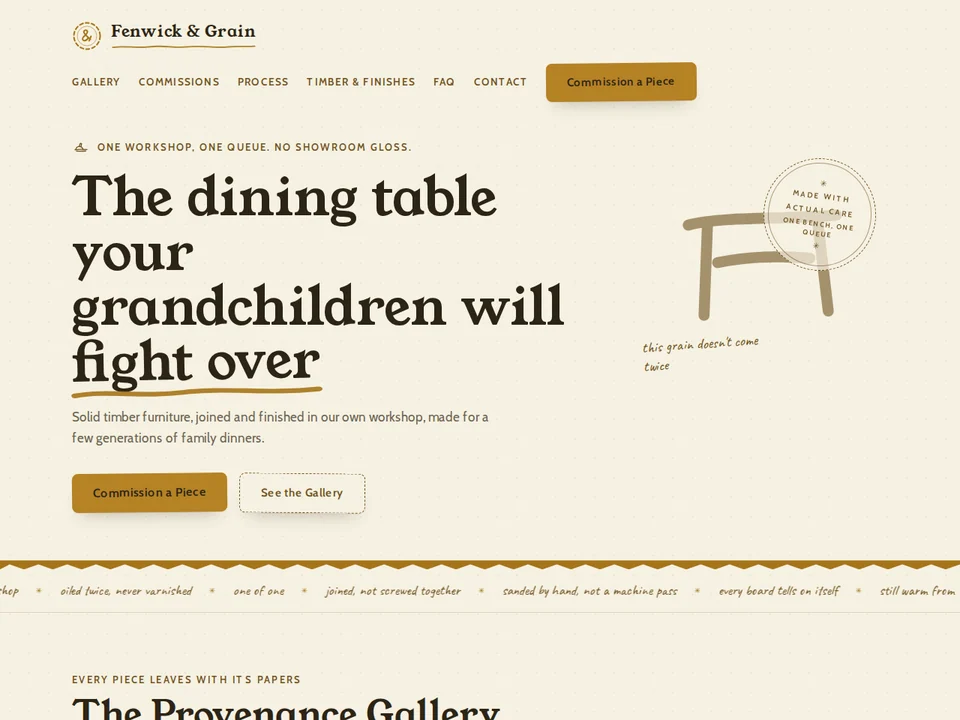
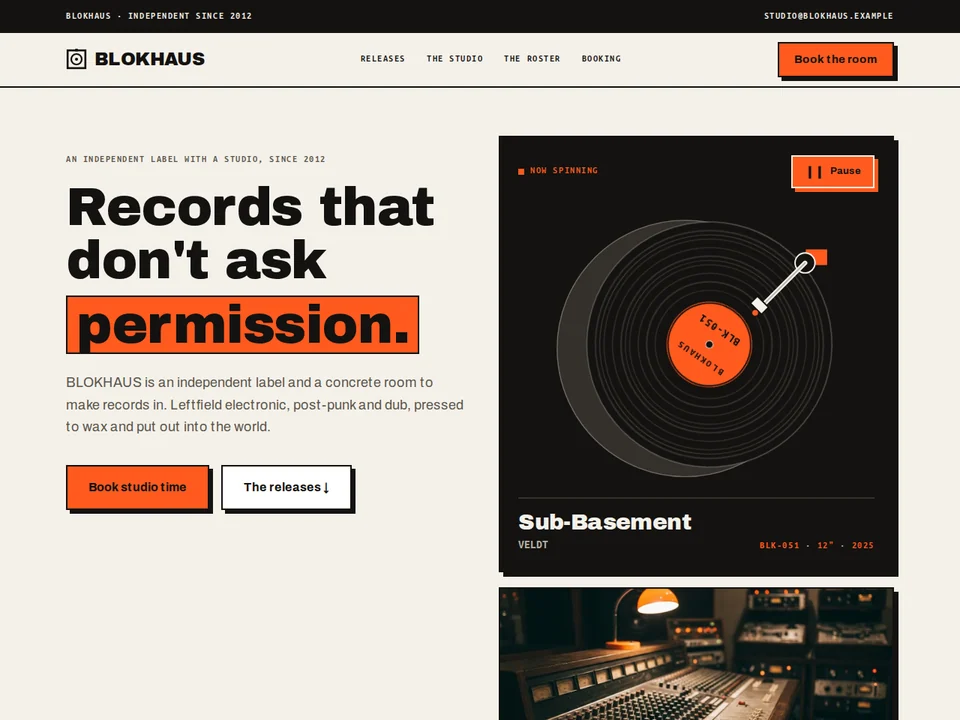
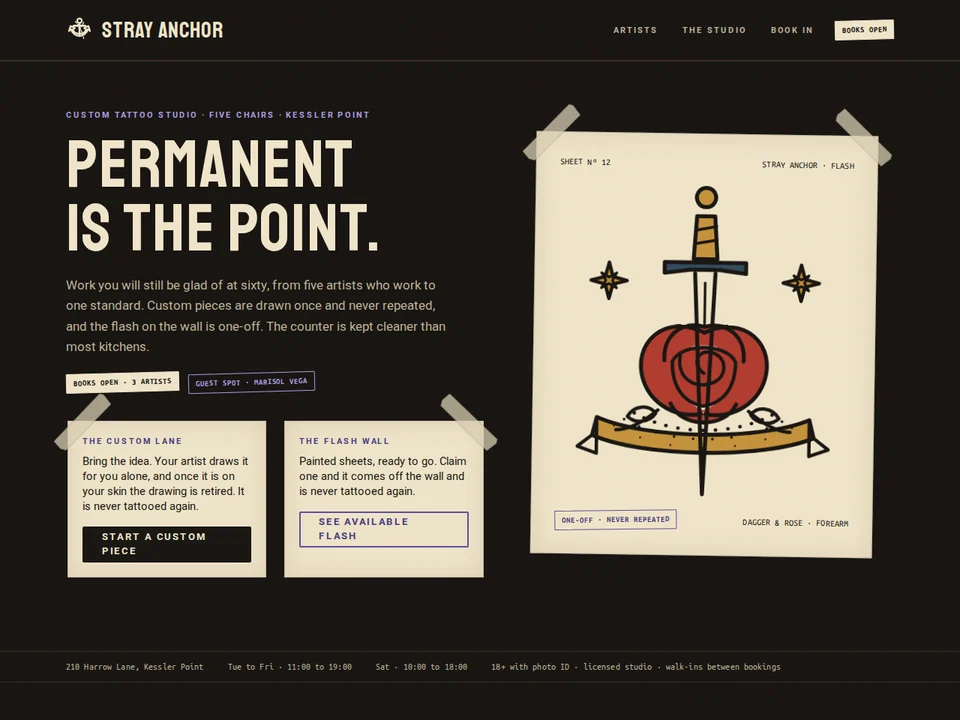
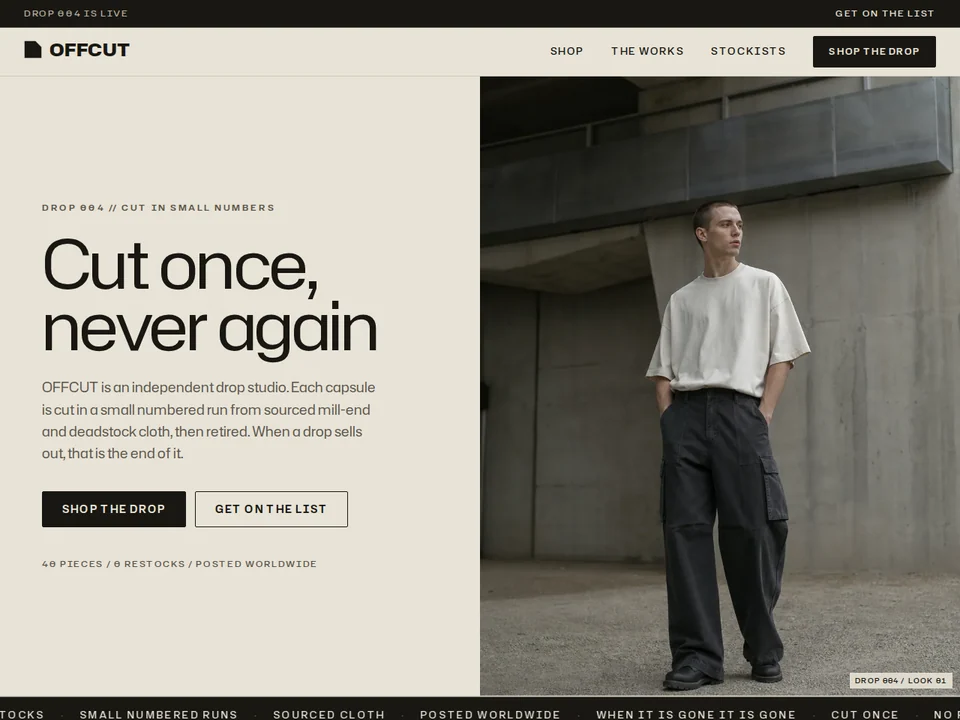
Want us to build Yours?
The kind of site people screenshot and send to their web guy. Tell us about the business, get an instant quote, and we build from your brief.